
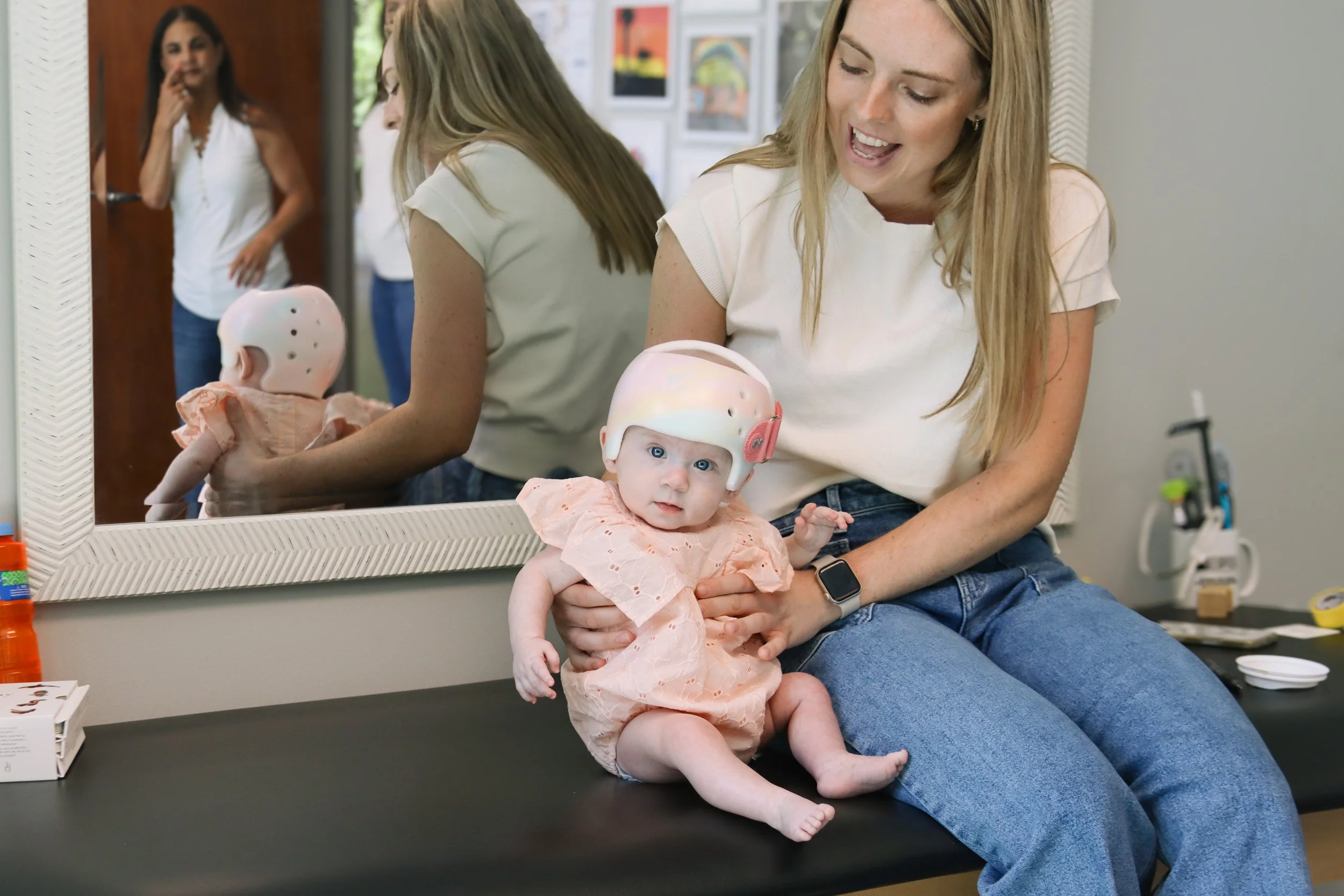
Torticollis and Plagiocephaly

Understanding Torticollis
and Plagiocephaly
If you’ve noticed your baby seems to favor one side (or your pediatrician mentioned something at your last visit), it’s completely normal to feel a wave of worry. You might be googling at midnight and feeling guilty that you missed something.
You didn’t. You’re here, you’re paying attention, and that’s exactly what your baby needs.
We have worked with hundreds of families exactly where you are, and you can believe us when we say you’re in the right place. We’re here to help.

What is Torticollis?
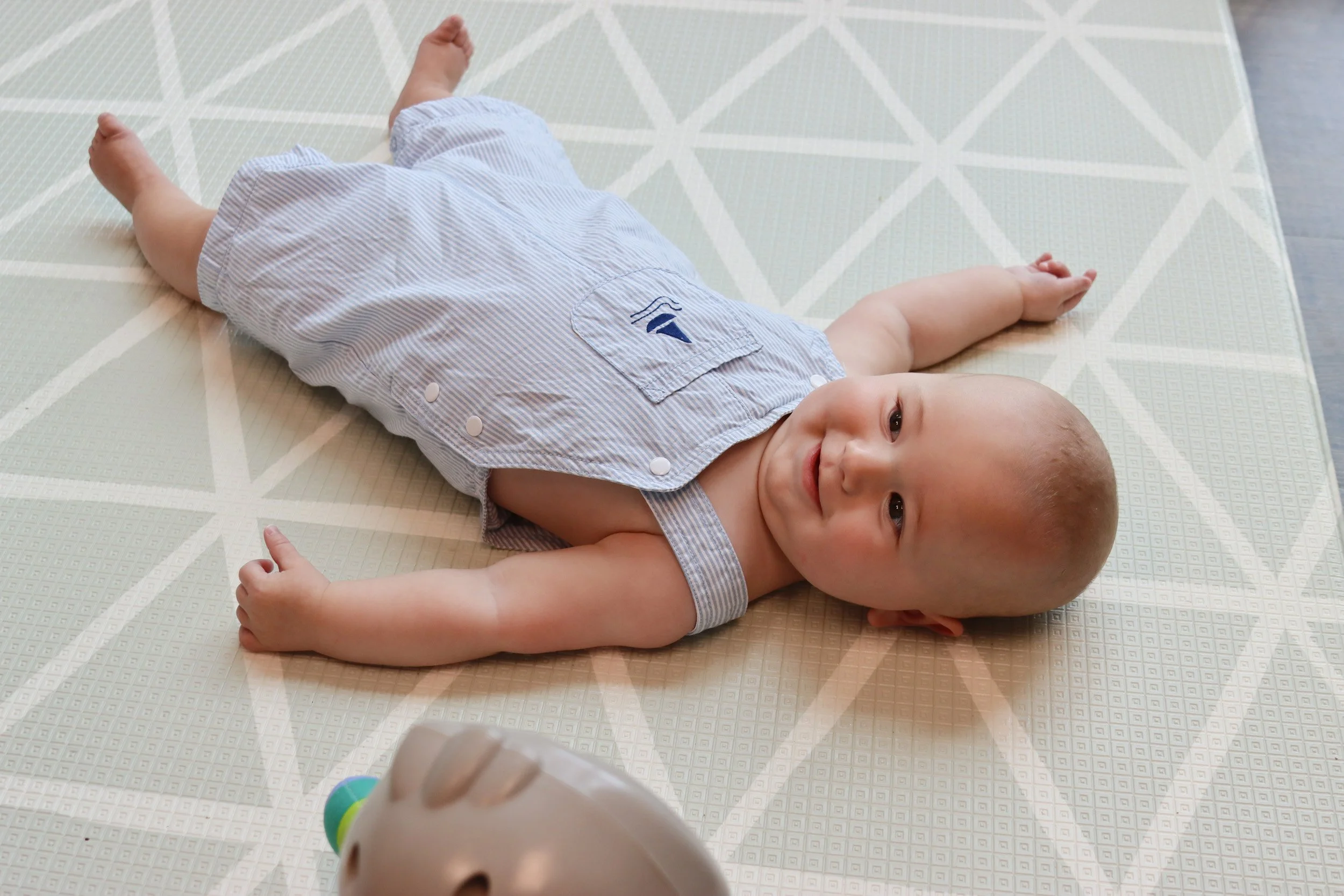
Torticollis is when the muscles in your baby's neck are tight and/or weak on one side, making it easier for them to turn or tilt their head in one direction. It's more common than you might think, and it's very treatable, especially when caught early.
What is Plagiocephaly?
Plagiocephaly is the term for when a baby's head develops a flat spot as a result of spending a lot of time in one position. Because torticollis causes babies to favor one side, the two conditions often show up together, which is why we always look at the full picture.

Why Physical Therapy Works
Physical therapy is the most effective treatment for torticollis, and it's actually what the American Academy of Pediatrics and the American Academy of Neurological Surgeons recommend as the first line of intervention.
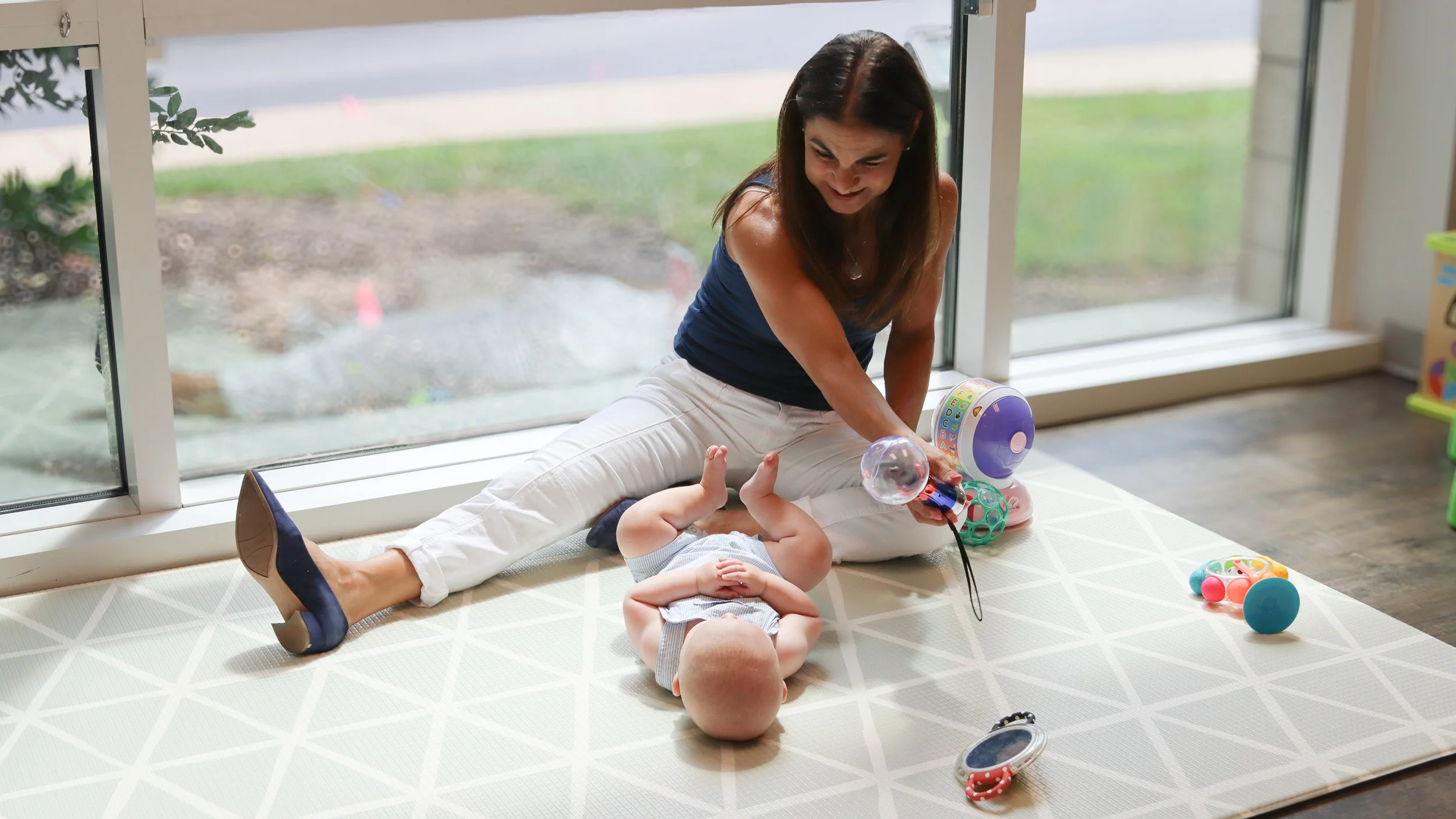
Here's why: torticollis is a muscle issue, and a pediatric physical therapist knows exactly how to release the muscle tightness and gain the necessary strength for optimal function through specialized, hands-on care.
Physical therapy works because it gets to the root cause.
Through a combination of treatment approaches such as traditional stretching and strengthening exercises, motor learning principles, Total Motion Release (TMR) for Tots, myofascial release, and other bodywork techniques, your baby's physical therapist uses intentional movement and purposeful play to release tightness. This helps your baby build the flexibility they need to move freely and increase the muscle strength they need for other skills, like rolling, crawling, and walking. The earlier you start treatment, the less likely that tightness will affect other areas of development.
85%
85% of babies who come to us for torticollis and plagiocephaly care end up not needing a helmet
98%
98% of infants who start physical therapy before 1 month of age achieve a nearly normal range of motion within 6 weeks of starting physical therapy
>90%
More than 90% of infants diagnosed with plagiocephaly also have torticollis

What Makes Looking Ahead Truly Different
Torticollis and plagiocephaly treatment is our specialty, and it has been since day one.
Looking Ahead was founded in 2014 specifically to support babies and families navigating torticollis and plagiocephaly, and that focused experience is at the heart of everything we do.
We Trust Your Instincts
We've learned that the parents who walk through our doors are some of the most observant, dedicated people we'll ever meet. We treat you like the expert you are on your own child and value your intuition and insight. We believe collaborating together makes us a great team, and more often than not, the people who start as our patients end up feeling like family.
Play-Based Approach
Since 2014, torticollis and plagiocephaly have been the focus of our practice, not an add-on. That specialization means a level of experience and depth you won't find everywhere. We have worked with hundreds of families, and we know this journey well.
A Team Approach to Your Baby’s Care
Our physical therapists are a tight-knit team who work closely together, so your child's progress is always a shared conversation and a team approach with other healthcare professionals. You benefit from a whole team's expertise, not just one perspective.
We’re Here in Between Visits, Too
Most parents reach out to us feeling worried, even fearful, when they can sense something isn't quite right. What we get to witness every day is those same parents leaving with clear direction and the confidence to advocate for their child. That transformation is what Looking Ahead has been built around since 2014.

Located in Franklin, Serving Families Throughout Middle Tennessee
About Us
Since 2014, Looking Ahead Pediatric Therapies has partnered with parents to help infants and toddlers thrive through early intervention and expert care. With torticollis and plagiocephaly care at the heart of what we do, we've grown into a team that also supports little ones with motor development, speech therapy, and feeding.
Resources To Keep
You Moving Forward
We want you to feel supported and empowered every step of the way.
That's why we've put together a collection of easy-to-access resources to make it easy to find what you need—everything from downloadable forms to toy recommendations from our team. Consider it your go-to hub for everything Looking Ahead.

Noticing developmental delays related to sitting, crawling, or walking? We're here to help.
Torticollis & Plagiocephaly
Frequently Asked Questions
-
You start here, and you don't have to have it all figured out. Hearing that your baby may have torticollis can send you into a spiral of fear and worry, and if that’s you, you’re not alone. That’s how most parents feel when they first reach out to us.
Come in, meet our team, and let us take it from there. We'll answer every question you have and help you feel clear and confident about the path forward.
You may have been told to "wait and see," but here's what we know: early intervention leads to faster, better outcomes, and waiting can mean your baby needs more intensive treatment down the road.
At Looking Ahead, we have specialized in physical therapy for torticollis and plagiocephaly since 2014. We have walked this road with countless families. You’re in the right place, and we’re with you every step of the way.
-
Torticollis is more common than most parents realize—affecting anywhere from 4%-16% of infants. It's not your fault. That’s the first thing we want you to know.
It most often develops because of positioning, either in the womb or in those early weeks of life. When a baby spends a lot of time with their head turned one way (whether due to how they were settled in utero, a longer or more difficult delivery, or a preferred position during sleep and feeding) the muscles on one side of the neck can become tight and shortened over time.
In some cases, it's present at birth. In others, it shows up in the first few weeks as patterns start to become more noticeable. Either way, it's something we see and treat every single day, and it responds really well to early intervention.
If you've noticed your baby consistently favoring one side, that's a great reason to come in for an evaluation. Catching it early makes a truly meaningful difference, and we'll walk you through everything from the very first visit.
-
If you're noticing a flat spot (this is called “plagiocephaly”) or some asymmetry in your baby's head shape, it's worth having someone take a look.
You may have been told to “wait and see,” but the earlier you start treatment, the more effective it is. You know your baby best, and if something feels off, trust that instinct.
An evaluation gives us a clear picture of what's going on and what, if anything, needs to be done. There’s no guesswork here—we take precise measurements of your baby’s head to quantify asymmetry and recommend next steps.
Just as important as measuring head shape is understanding what’s causing it. We take a holistic approach to identify and treat the root causes of plagiocephaly—not just the visible symptoms. While helmets can reshape the head, they don’t address the underlying issue.
We treat torticollis and plagiocephaly in our office every day and are experts at helping you understand and implement the tools necessary for your child’s journey to head symmetry. You don’t have to figure this out alone.
-
Most babies make a lot of progress with physical therapy alone, especially when we start early.
At Looking Ahead, 85% of the babies we see for torticollis or plagiocephaly end up not needing a helmet.
If a helmet becomes the best option for your baby, we'll explain why it's recommended, what to expect, and connect you with the cranial orthotists we trust—so you feel confident and supported in that decision.
-
Looking Ahead was founded in 2014 for one reason: to be the best possible support for families navigating torticollis and plagiocephaly. This isn't a service we added on. It's the entire reason we exist. We are evidence-based and up to date on all of the latest research and clinical advances in torticollis and plagiocephaly care, so you never have to wonder if your baby is getting the most current, effective treatment.
We are a tight knit group of therapists, bringing different expertise and perspectives to the table when providing your baby's care. We also have a holistic approach, which means we are not only addressing head and neck strength, but whole body development.
We also believe in a strong partnership with parents to continue progress at home. After each visit, you'll get a link to online homework with specific exercises and techniques you can do at home to continue to support your baby’s progress. You’ll be confidently equipped to keep the momentum going at home.
We are here to support you in between appointments too. Have a random question or want to share a photo of your child’s latest achievement? We love receiving messages like this from our parents! At Looking Ahead, it’s important to us that you feel supported every step of the way, not just on the days you have appointments.
But what we hear from families most often isn't about technique. It's about how they felt. Parents come to us carrying worry, uncertainty, and that particular exhaustion that comes with not knowing what's ahead. What we get to witness, over and over, is those same families leaving as confident, informed advocates for their child. That transformation is what we're here for.
We've designed our space to reflect that too. Our office is warm, open, and intentional. We hope it’s the kind of place where you actually want to spend time. Many of the families who come to us end up forming real connections with our team and with each other.
We don't take that lightly. Being trusted with your baby and your family during this season is something we genuinely treasure, and we often keep up with families even after their treatment has ended.
-
We have some families that bring their baby to our office when they are just days old! The sooner you start, the more you are able to do proactively and preventatively.
In fact, research shows that 98% of infants who start physical therapy before 1 month of age achieve a nearly normal range of motion within 6 weeks of starting physical therapy. That’s the power of early intervention.
The majority of families start working with us around the time their baby is two or three months old. But there’s no time too early or too late. We are here to help no matter where your baby is developmentally.
-
Your first appointment at Looking Ahead is all about getting to know you and your child. We'll start with a comprehensive evaluation with one of our physical therapists who specializes in torticollis and plagiocephaly. We'll take careful measurements of your baby's head to understand the degree of asymmetry and track progress. Our focus is understanding where your little one is developmentally and what they need to thrive. You can expect a warm, relaxed environment where your child is free to be themselves, no pressure, no rush.
From there, we'll walk you through our evaluation and build an individualized treatment plan together. Our goal is for you to leave with a clear path forward and the confidence to start supporting your child at home right away.
-
There is no one-size-fits-all answer because every baby is different in what kind of support they need.
After your first visit, your therapist will share a realistic picture of what to expect and keep you in the loop as things progress. Some families see big changes in a few weeks; others work with us over a few months. We’ll make sure you feel supported by our team every step of the journey.
-
This is a common question, and we understand why. No parent wants to see their baby upset. The truth is, physical therapy asks babies to do hard things. Working through tightness or building new strength can be uncomfortable, and babies may fuss, especially in those first few sessions. But our therapists are experts at working with infants through these moments.
Our physical therapists are specifically trained on reading your baby's cues, knowing when to modify an approach, and making the work as gentle as possible while still being effective.
You will be right there with your baby the entire time, which means we'll walk you through what we're doing and why. As your baby gains strength and flexibility, the work gets easier for them, and most little ones start tolerating sessions much better.
All of our work is intentional, and over time, physical therapy helps your baby become more comfortable in their body. As their muscles get stronger, their range of motion improves,and they build trust with us, you'll start to notice a real difference in how at ease they feel.
-
Total Motion Release (TMR) for Tots is one of several gentler bodywork approaches to treatment like myofascial release, Craniosacral Therapy (CST), or the Vaughn Approach. TMR for Tots works with your baby’s natural positions to gain flexibility. Your baby stays relaxed while we support their movement, which makes it especially effective for little ones with torticollis, body tension, or asymmetrical movement patterns.
Not every baby responds the same way to treatment. Some do well with traditional stretching and strengthening. Others benefit from gentler approaches like TMR for Tots, Craniosacral Therapy (CST), or other myofascial bodywork techniques. Our job is identifying which technique will work best for your child.
What's important to understand: gaining flexibility—whether through TMR for Tots, stretching, or other bodywork techniques—is only one piece. Your baby also needs to build muscle strength and endurance to use that new range of motion. This is what differentiates physical therapy in this space. We address the whole picture.
-
No! You can reach out to us directly.
Tennessee is a direct access state, which means you do not need a referral for physical therapy. We'll walk you through everything you need to get started and let you know if there are any additional steps specific to your situation.
-
Yes, in most cases physical therapy for infants and young children is covered by insurance.
We are in-network with many insurance providers like Blue Cross Blue Shield (BCBS), United/UMR, Aetna, and Cigna, as well as some Humana and TRICARE plans. If you're covered by a different plan, we can provide a superbill for you to submit to your insurance for potential reimbursement. We are not in network with TennCare and TEIS.
We also accept self-pay.
It’s important to us that there are no surprises in the cost of your therapy visits, so we will work with you and your insurance to make sure you know exactly what to expect.
-
Payment rates vary depending on the specifics of your insurance plan. Please call our office and we will be happy to work with your family to find out exactly what your insurance covers so you know what to expect.
You have the right to receive a “Good Faith Estimate” explaining how much your medical care will cost.
Under the No Surprises Act, healthcare providers are required to provide you with an explanation of how much your medical care will cost.
Looking Ahead Pediatric Therapies provides all patients (self-pay and insured) with a written copy of an estimate of expected charges for medical services by the time services are provided. This estimate, known as the Verfication of Benefits letter, is based solely on the information provided by the primary caregiver and the insurance provider at the time of the request to Looking Ahead P.T. For questions or to request a Good Faith Estimate, please contact Looking Ahead Pediatric Therapies at 615-784-8104 or info@lookingaheadpt.com.
For more information about your right to a Good Faith Estimate, visit www.cms.gov/nosurprises